 English



Meta Description: Explore the profound meaning of charnel grounds (Shitavana) in Tibetan Buddhism. Learn about the symbolism of Chitipati (Charnel Ground Protectors), their role in meditation on impermanence, and their powerful representation in sacred art. Discover how these themes of death and decay are central to Buddhist philosophy and practice.
Introduction to Tibetan Buddhism Charnel Grounds
Shitavana, or charnel grounds, hold profound significance in Tibetan Buddhism. Associated with these sacred sites is the revered Dharma Protector known as Chitipati (Tibetan: Thodröl Dapö). This guardian deity embodies and protects the "sky burial" sites. Simultaneously, Chitipati is considered a manifestation of Chakrasamvara (Heruka) and Vajravarahi—two pivotal tantric deities—and is also one of the Nine Great Protectors honored in the Nyingma tradition.

Alt text: A Tibetan Buddhist thangka or sculpture depicting the Chitipati, the protectors of charnel grounds.
The Iconography of Chitipati
This sublime deity bestows blessings upon practitioners who choose to meditate in secluded places like Tibetan Buddhism charnel grounds or cemeteries. Believed to remove obstacles, avert misfortune, and create conditions conducive to enlightenment, Chitipati is especially revered for its power to repel external enemies and thieves.
In traditional iconography, Chitipati is portrayed as a pair of skeletons, male and female. The male figure holds a bone staff aloft in his right hand and a skull-cup brimming with blood in his left. He stands in a dynamic posture with his right leg bent and left extended, atop a white conch shell. The female figure holds a treasure vase in her right hand and a bunch of fruit aloft in her left, standing with her left leg bent and right extended, also upon a conch shell. Both figures are adorned with colorful scarves and short skirts, standing amidst a blazing wisdom fire. Their skeletal form powerfully emphasizes the Buddhist teaching of impermanence, while their dynamic poses present a high level of artistic challenge in achieving balance and detail in sculptures or thangka paintings.

Alt text: Detailed depiction of the male and female Chitipati figures with ritual implements, symbolizing impermanence.
The Realm of the Dead: Understanding Shitavana
Death is the ultimate destination for all sentient beings, the cessation of life. Archaeological evidence points to human burial rituals dating back over 200,000 years, with early sites found in Atapuerca, Spain, and Pontnewydd Cave, Wales. Across cultures, funerary rites are sacred, marking the end of an individual's worldly journey and the beginning of an unknown new phase.
In Buddhist tradition, the body may return to nature through water burial, cremation, or sky burial—a distinctive custom in Tibetan culture. A Charnel Ground is not merely a physical location but a profound symbol of the inherent impermanence of existence. According to Buddhist lexicons, "Shitavana" translates to "cold forest," referring to desolate, frigid places where corpses are left to decompose.

Alt text: Traditional Tibetan sky burial site (Charnel ground) in a mountainous landscape.
Charnel Grounds as a Site for Contemplation and Practice
While a charnel ground may evoke fear and discomfort for the ordinary person, for practitioners seeking liberation, these places are considered ideal for meditation and profound reflection. They are believed to be inhabited by spirits, dakinis, and other non-human beings. Here, a practitioner can directly witness impermanence and confront their deepest fears. Shitavana are also considered sacred repositories for tantric texts.
In ancient India, eight great charnel grounds were renowned for their spiritual significance, profoundly influencing Buddhist practice and philosophy. These sites frequently appear in early Tibetan Buddhist mandalas. Padmasambhava (Guru Rinpoche), the founder of Tibetan Buddhism, is said to have practiced in these Eight Great Charnel Grounds and attained eight siddhis (spiritual accomplishments), including mastery over elements, healing diseases, and protection from calamities.

Alt text: A Tibetan Buddhist mandala or painting illustrating the eight great charnel grounds.
Artistic Manifestations of Charnel Ground Symbolism
Tibetan Buddhist art often draws inspiration from charnel ground imagery. Symbols related to impermanence, such as skulls and bone ornaments, are prevalent in thangkas, sculptures, and murals. For instance, patterns depicting charnel grounds are painted on monastery walls and ritual implements to remind practitioners of life's transience. The flaming skeletal forms of Dharma Protectors like Chitipati inspire detachment from worldly desires, serving as a vivid embodiment of impermanence.
Creating a sculpture of Chitipati presents a considerable artistic challenge, requiring meticulous detail in depicting skeletal structure, skull-cups, and other sacred objects. These artworks not only convey profound Dharma teachings but also demand exceptional technical skill and devotion from the artisan.
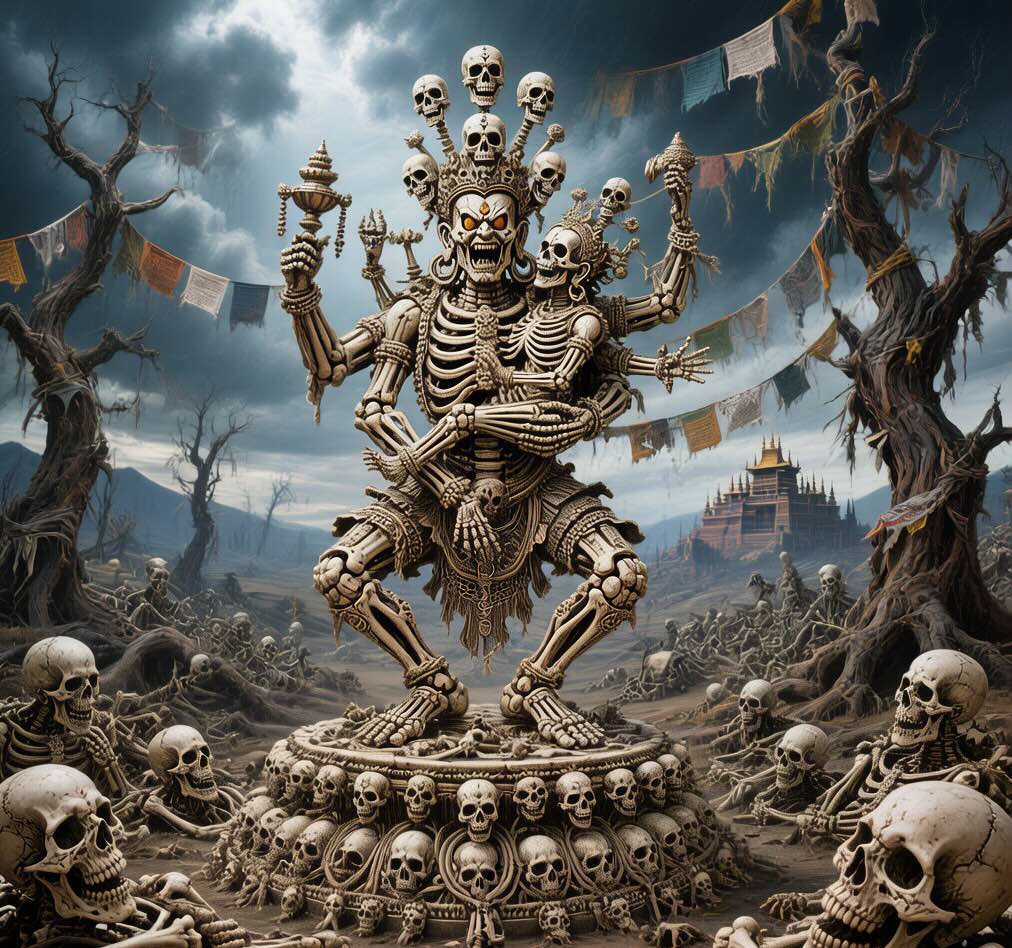
Alt text: Detail of a Chitipati sculpture or ritual object, showcasing intricate bone ornamentation.
Embracing Impermanence for a Fulfilling Life
The charnel ground is a space where death, decay, and transcendence coexist. Its imagery serves as a powerful reminder that all conditioned phenomena are impermanent. By contemplating these truths, practitioners are encouraged to let go of material attachment, seek wisdom, and strive diligently for liberation. Even those unfamiliar with Buddhist philosophy can glean a universal message from this art and symbolism: the brevity of life calls us to cherish the present moment, living with purpose and gratitude.

Alt text: A symbolic Tibetan Buddhist artwork conveying the theme of impermanence and spiritual transcendence.
Conclusion: The Enduring Legacy of Shitavana
Charnel grounds and their associated deities are deeply rooted in the philosophy, art, and practice of Tibetan Buddhism. They remind us of the impermanent nature of all things, inspiring introspection and the pursuit of wisdom within that transience. For those exploring Tibetan Buddhist jewelry and sacred artifacts, objects themed around Shitavana and Chitipati carry deep spiritual significance. They serve as tangible witnesses to the path of enlightenment and the profound beauty of embracing life's inherent impermanence.


